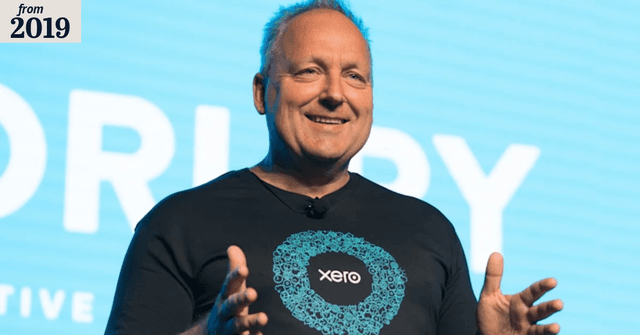
AWS CEO Matt Garman just revealed a bold AWS AI investment strategy that has the entire cloud industry talking. At the HumanX conference in San Francisco this week, Garman defended Amazon’s decision to invest $50 billion in OpenAI while maintaining an existing $8 billion partnership with Anthropic. Rather than viewing this as a contradiction, he framed it as business as usual for the cloud giant.
So why does this AWS AI investment strategy matter for fintech and the broader technology landscape? The answer lies in how cloud providers are evolving from infrastructure vendors into AI intermediaries, and the financial implications are enormous.
A Long History of Competing With Partners
Garman has been at Amazon since joining as a business school intern in 2005, one year before AWS even launched. During those early years, the company recognized it could not build every cloud offering on its own. Consequently, AWS began forging partnerships with outside companies while simultaneously competing against them.
This pattern is central to the current AWS AI investment strategy. As TechCrunch reported, Garman told the audience that technology interdependence makes such competitive partnerships inevitable. He pointed to Oracle as a clear example, noting that one of AWS’s biggest database competitors now sells its products directly on the Amazon platform. That kind of arrangement would have been unthinkable in 2006, yet today it represents standard practice in enterprise cloud.
For businesses that rely on AI automation in regulated finance, these shifting competitive boundaries have direct consequences. The providers powering their infrastructure are no longer neutral hosts; they are active participants with their own models and commercial interests.
The Competitive Necessity Behind the OpenAI Deal
One of the most striking elements of this AWS AI investment strategy is the sheer scale of the OpenAI commitment. At $50 billion, it dwarfs the earlier Anthropic partnership. However, Garman described the move as nearly unavoidable.
Both OpenAI and Anthropic models were already accessible through Microsoft Azure, which remains the primary rival to AWS. Without securing direct access to OpenAI’s models for its own customers, Amazon risked losing ground in a market where model availability drives platform selection. Therefore, the AWS AI investment strategy was as much about defense as growth.
The Register noted that Garman also pushed back on suggestions that AI spending is overhyped. He cited internal Amazon data showing software developers are roughly 4.5 times more productive with AI tools. In his view, those efficiency gains are permanent and will only expand from here.
Investor Loyalty Is Fading Across the AI Sector
The AWS AI investment strategy also reflects a broader shift in how capital flows through artificial intelligence. Traditional notions of exclusive investor loyalty are breaking down rapidly. When Anthropic closed its $30 billion funding round in early 2025, at least a dozen of its backers were also invested in OpenAI. Even Microsoft, the primary cloud partner for OpenAI, participated in funding for Anthropic.
This trend suggests that major technology investors increasingly treat AI development as a portfolio play rather than a winner-take-all bet. For the fintech sector, where companies depend on open banking and B2B payment infrastructure, this diversification approach mirrors the multi-vendor strategies already common in financial technology.
Model Routing Changes the Game for Cloud Customers
Perhaps the most forward-looking piece of the AWS AI investment strategy involves model routing. Garman explained that cloud providers are building services that automatically direct tasks to the most suitable AI model based on the nature of the work. One model might excel at planning, another at reasoning, and a cheaper option might handle simpler tasks like code completion.
This approach benefits customers by maximizing performance and reducing costs. At the same time, it gives cloud providers a powerful mechanism to introduce their own proprietary models into the workflow. As a result, the AWS AI investment strategy is not just about securing access to external models. It is about positioning Amazon’s homegrown AI capabilities alongside those of OpenAI and Anthropic within a unified platform.
For businesses preparing for agentic commerce, model routing could reshape how AI-driven purchasing decisions and automated customer interactions are handled at scale.
What This Means for the Future of Cloud and Fintech
The AWS AI investment strategy signals that the era of exclusive cloud partnerships is ending. In its place, a multi-model ecosystem is emerging where cloud platforms act as curators and routers of competing AI capabilities. This evolution carries significant implications for enterprise technology buyers, fintech operators, and investors alike.
Garman summed up the direction plainly at HumanX, telling attendees that multi-model usage is where the industry is heading. Cloud providers that embrace this AWS AI investment strategy of open competition and strategic co-investment will likely define the next phase of artificial intelligence infrastructure. Those that cling to exclusivity may find themselves on the wrong side of a rapidly shifting market.