Subscribe to Updates
Get the latest news from Fintechbits.
- Self-Driving Car Incident in Texas Results in Death of Duck, Prompting Community Outcry
- PremFina Expands Waterfall Funding Agreement to £100 Million
- WireGuard VPN Developer Unable to Release Software Updates Following Microsoft Account Lockout
- Finova Broker Payments Collaborates with MBT to Support Brokers
- Meta Introduces the Muse Spark Model in a Comprehensive Revamp of Its AI Technology
- Fireblocks and Dynamic Introduce Enterprise-Grade Wallet Infrastructure for TON and Telegram
- Early Payment Discount Financing: Does It Deliver Real Results?
- British Cryptographer Adam Back Refutes New York Times Report Claiming He is Bitcoin Creator Satoshi Nakamoto
Author: Charitarth Sindhu
Fintech AI compliance is no longer something founders can push to next quarter. Artificial intelligence is reshaping how financial technology companies make lending, investment, and risk assessment decisions. And regulators across the globe are racing to catch up. Three major deadlines converge in August 2026. The EU AI Act’s high-risk provisions take effect, classifying credit scoring and insurance pricing as high-risk AI. Colorado’s AI Act kicks in with comprehensive requirements for algorithmic financial decisions. On top of that, the UK’s FCA is expected to publish practical AI guidance around the same time. That gives fintech leaders roughly five months to…
B2B BNPL adoption is reshaping business commerce at a pace that leaves its consumer counterpart in the dust. While consumer Buy Now, Pay Later growth has slowed to roughly 10-14% annually, B2B BNPL adoption is expanding at a 27% CAGR, projected to reach $670 billion by 2029. So what is fuelling this gap? Industry experts point to five key factors accelerating B2B BNPL adoption. From ERP integration to working capital management, these drivers reveal why business buyers are embracing payment flexibility faster than individual consumers ever did. B2B BNPL Adoption Starts With Predictable Revenue Business owners approach deferred payments differently…
Author: Darren Tredgold, General Manager, Independent Steel Company Trade supplier invoicing is broken in Australia, and it is costing regional distributors their future. If you run a hyperlocal supply business like I do, you already know that trade supplier invoicing sits at the centre of a cash flow crisis worth $115 billion in unpaid invoices nationally. I am Darren Tredgold, General Manager of Independent Steel Company. We have been serving South-East NSW since 2000 from branches in Queanbeyan, Nowra, and Moss Vale. Every week, I watch capable regional suppliers struggle against national brands that can absorb 60-day payment cycles without blinking. Meanwhile,…
Author: Callum Gracie, Founder, Gia AI Freelancer payment infrastructure hasn’t kept pace with how modern agencies operate. Despite building some of the most advanced distributed workforces in professional services, SEO and digital marketing firms still depend on freelancer payment infrastructure designed for domestic corporate transfers. That mismatch is costing the industry billions. Cross-border payments average 6.5% in fees, 63% of freelancers wait over 30 days for payment, and agencies juggle three to five disconnected tools just to pay their teams. Meanwhile, the freelancer economy generates $1.5 trillion annually in the U.S. alone. Something has to give. How SEO Agencies Cracked the Freelancer-First…
Author: Hasan Can Soygök, Founder, Remotify Company as a service is not a new idea. Sweden’s Frilans Finans has operated this model since 1999, serving over 150,000 freelancers and processing roughly 145 million euros in annual turnover. What is new is the explosive convergence of regulatory pressure, cross-border freelancing growth, and digital infrastructure that is turning company as a service from a Nordic niche into a global necessity. The concept is straightforward. The platform invoices the client on the freelancer’s behalf under its own legal entity, collects payment, deducts its fee and applicable taxes, then pays out the freelancer. The freelancer never…
Author: Alena Sarri, Managing Director, Aquatots Swim School Fintech data privacy should be a given for platforms handling your bank details, Social Security numbers and transaction history. Yet the most rigorous data protection practices in 2025 don’t come from Silicon Valley or Wall Street. They come from your local children’s swim school. That comparison sounds ridiculous on the surface. However, enforcement records, breach data and peer-reviewed research across three continents tell a different story. Small businesses handling children’s personal information routinely outperform well-funded fintech data privacy programs on consent management, data minimisation and security controls. Here’s why that gap should concern everyone…
NSW spends $42 billion a year on government procurement. Yet the buy local fintech infrastructure needed to channel that money to regional SMEs barely exists. Despite sweeping policy reform, buy local fintech gaps mean three-quarters of procurement dollars still bypass small businesses. Only $10.1 billion reaches SMEs, even though they represent 97% of businesses across the state. The remaining $32 billion flows to large national and international suppliers instead. So where does the buy local fintech problem begin, and why has policy reform alone failed to fix it? Policy Is Moving Fast, but Buy Local Fintech Lags Behind The Minns…
Home electrification finance has moved from bank branches to kitchen tables across Australia. When a homeowner decides to go all-electric with solar, batteries, heat pumps and induction cooking, home electrification finance decisions can hit $25,000 to $40,000 before rebates. That is a major household financial commitment. Yet the person guiding families through ROI calculations and payback periods is not a financial advisor. It is their electrician. So how did tradespeople become Australia’s most trusted guides for this kind of spending? And what does it mean for homeowners weighing up the numbers right now? Home Electrification Finance Starts at the Kitchen…
Author: Hasan Can Soygök, Founder, Remotify DAC7 tax reporting has quietly transformed every digital platform that touches freelancer payments into a tax reporting entity. Three full reporting cycles have now been completed since the directive took effect, and the rules are expanding globally. If you operate a platform that facilitates freelancer services, you are already subject to DAC7 tax reporting obligations regardless of your size. DAC7 Tax Reporting Has No Minimum Platform Size The most important design decision in DAC7 (Council Directive 2021/514) is that there is no minimum platform size threshold. A bootstrapped platform serving 10,000 freelancers faces the same DAC7…
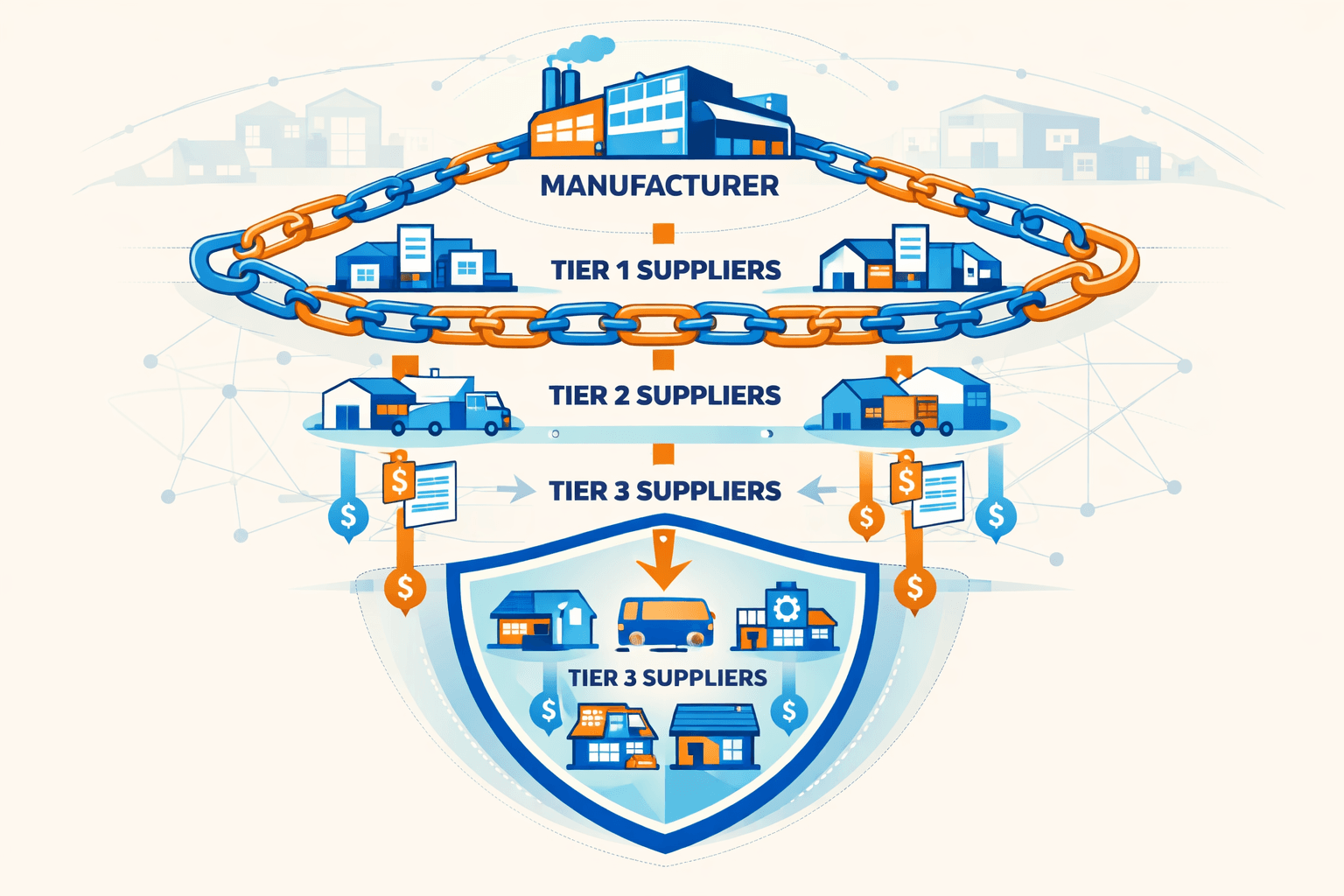
Author: Darren Tredgold, General Manager, Independent Steel Company Supply chain finance has a $2.5 trillion problem. The global supply chain finance gap has ballooned 47% since 2020, according to the Asian Development Bank’s latest survey. Meanwhile, 41% of SME trade finance applications still get rejected by traditional lenders. So where does all that unmet demand go? Increasingly, it flows toward fintech platforms that have figured out how to make small-ticket supply chain finance profitable where banks cannot. Supply Chain Finance Gaps Start With Banks The core issue is straightforward. Processing a letter of credit for a $50,000 shipment costs a bank nearly…