

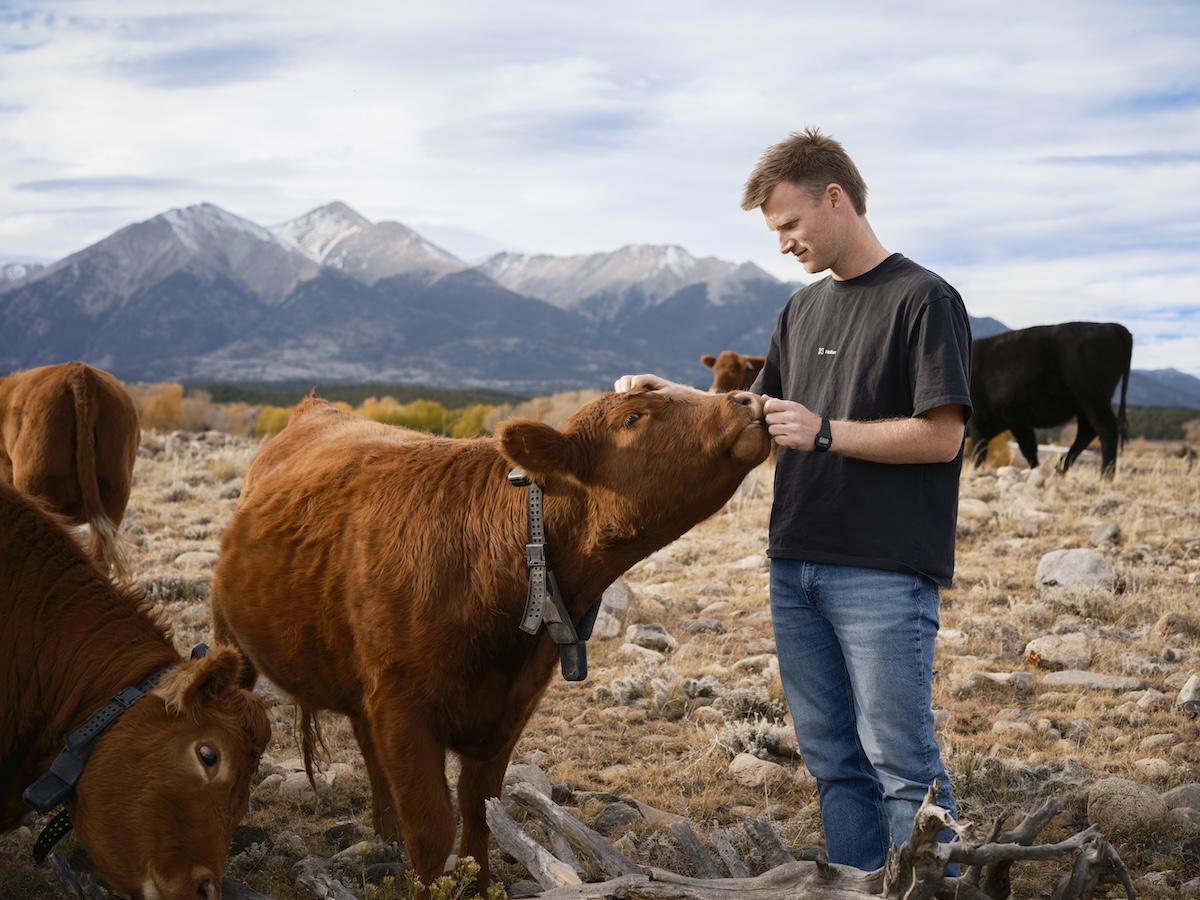
Founders Fund Invests in Innovative Cattle Management Startup
Founders Fund has established its reputation by investing in pioneering companies that create entirely new markets, a concept championed by Peter Thiel. Its impressive portfolio features industry giants like Facebook, SpaceX, and Palantir. The firm’s latest venture involves a New Zealand-based startup that has developed solar-powered smart collars for cattle management.
Halter Achieves Major Funding Milestone
Halter recently closed a $220 million Series E funding round, securing a valuation of $2 billion, with Founders Fund as the round’s lead investor. Unlike many tech companies that dominate headlines, Halter is focused on solving a substantial but often overlooked challenge: managing cattle over vast, remote terrains without the use of traditional tools such as dogs, horses, motorbikes, or helicopters.
Innovative Solutions for Practical Farming Challenges
Craig Piggott, Halter’s 30-year-old founder and CEO, has been diligently working on a solution for the past nine years. He explained, “For pasture-based farming, whether dairy or beef, effective land management is crucial. Fencing plays a pivotal role in controlling where animals graze and how land is rested. The idea of managing this virtually made perfect sense.”
Transformative Technology Behind Halter’s System
Halter’s innovative system incorporates a solar-powered collar, a network of low-frequency towers, and a user-friendly smartphone app. This technology allows farmers to create virtual fences, continuously monitor their herds, and move their cattle remotely. Animals are trained to respond to audio and vibration cues from the collar—similar to a car’s beeping as it nears an obstacle. According to Piggott, most cattle learn to adapt after just three encounters with a virtual fence.
Data-Driven Insights for Enhanced Animal Health
The collar offers more than just herding capabilities. It continuously collects behavioral data that aids in tracking animal health, monitoring fertility cycles, and identifying sickness in individual animals. Piggott asserts that Halter’s dataset is likely the largest of its kind globally. The company is also in its fifth generation of hardware, with its reproductive health product currently in beta testing with customers in the United States.
Growing Adoption and Competitive Landscape
In just nine years, Halter’s collars are in use on over a million cattle across more than 2,000 farms in New Zealand, Australia, and the United States, covering 22 states. The financial benefits are clear: by allowing ranchers superior control over grazing, Halter can boost land productivity by up to 20%. Piggott mentioned that some customers report doubling their land’s yield. Halter is not alone in exploring this space; major players like Merck have developed their own virtual fencing systems, while startups like Grazemate are proposing innovative approaches such as using autonomous drones for herding.
Halter’s Unique Position in Agricultural Technology
Despite competition, Piggott remains focused on Halter’s foundational commitment to reliability and effectiveness. He emphasizes the importance of maintaining high uptime, noting that a mere 1% failure rate could result in multiple animals being uncontained. This focus on engineering excellence sets Halter apart in a sector where many startups have struggled recently due to high operational costs and farmer resistance to new products. Piggott attributes Halter’s success to its focus on delivering a strong financial return from day one.
Strategic Vision for Global Expansion
Unlike many tech companies, Halter does not view the U.S. as its primary market. Piggott acknowledges the importance of the U.S. but emphasizes that agriculture is a global industry requiring a broad reach. With total funding now approaching $400 million, Halter plans to expand its presence in the U.S., South America, and Europe. The potential for growth is significant, especially considering that Halter’s collars are currently used on just one million cows, a fraction of the one billion cattle worldwide. “There’s a long road ahead and much more product development to pursue,” Piggott concluded.
For an in-depth discussion with Piggott, listen to the latest episode of the StrictlyVC Download podcast, released every Tuesday.