Close Menu
Fintechbits
  • News
  • AI
  • Acquisitions
  • Trends
  • Insights
  • Rumors
  • Startups
  • finjobsly

Subscribe to Updates

Get the latest news from Fintechbits.

Trending Now

California Establishes Itself as the Leading US FinTech Hub with Over One-Third of Q1 2025 Deals

March 19, 2026

Family Friendly Billing: 5 Proven Reasons Gyms Got It Wrong for Kids

March 19, 2026

A Comprehensive Guide to Enhancing Business Performance

March 19, 2026

An In-Depth Look at a $1.1 Billion Initiative to Reshore Critical Minerals Refining

March 19, 2026
Facebook X (Twitter) Instagram
Trending
  • California Establishes Itself as the Leading US FinTech Hub with Over One-Third of Q1 2025 Deals
  • Family Friendly Billing: 5 Proven Reasons Gyms Got It Wrong for Kids
  • A Comprehensive Guide to Enhancing Business Performance
  • An In-Depth Look at a $1.1 Billion Initiative to Reshore Critical Minerals Refining
  • Innovate Finance Cautions That Bank of England Proposals May Undermine GBP Stablecoin and Increase Risk of Dollarization
  • Establishing a Robust Framework for Botswana’s Fintech Ecosystem by 2026
  • Multiverse Computing Advances the Integration of Compressed AI Models into the Mainstream Market
  • LSEG Introduces Sustainability Ratings for Global Markets
Facebook X (Twitter) Instagram Pinterest Vimeo
Fintechbits
  • News

    A Comprehensive Guide to Enhancing Business Performance

    March 19, 2026

    Establishing a Robust Framework for Botswana’s Fintech Ecosystem by 2026

    March 19, 2026

    LSEG Introduces Sustainability Ratings for Global Markets

    March 19, 2026

    M-Files Microsoft Copilot: 3 Proven Advantages for Better AI Results

    March 19, 2026

    Brazilian InsurTech Azos Won $25 Million in Series C Funding

    March 18, 2026
  • AI

    Weaker Dollar and Diversification Enhance Appeal of Emerging Markets for Global Investors, According to Finnfund

    March 18, 2026

    Anna Money Achieves HMRC Approval for Making Tax Digital and Introduces Complimentary Auto Accountant Tool

    March 18, 2026

    DRC Fintech: 5 Essential Developments Transforming Digital Finance in 2026

    March 18, 2026

    Africa’s Fintech Future Highlights the Opening of IFF 2026 in Kigali

    March 17, 2026

    Algeria’s Fintech Ecosystem in 2026: Strategies for Building Momentum

    March 16, 2026
  • Acquisitions

    California Establishes Itself as the Leading US FinTech Hub with Over One-Third of Q1 2025 Deals

    March 19, 2026

    European FinTech Transactions Exceeding $100M Rise 2.6 Times Quarter-over-Quarter as Funding Recovers in Q1 2025

    March 18, 2026

    Californian Companies Lead US FinTech Transactions in Q2 with a 19% Year-Over-Year Growth in Deal Activity

    March 17, 2026

    Brazilian Companies Lead LatAm FinTech Transactions in Q3 with 54% Quarter-over-Quarter Growth

    March 16, 2026

    Latin American FinTech Investments Decline by 50% Year-over-Year in Q4 2025 Amid Increased Investor Caution

    March 15, 2026
  • Trends

    European FinTech 2025 Is Back and Means Business

    March 16, 2026

    Subscription Payment Fatigue Is Coming for Children’s Services

    March 16, 2026

    Green Fintech: 5 Proven Reasons It Goes Beyond a Compliance Checkbox

    March 16, 2026

    Claude overtakes ChatGPT as AI trust debate intensifies

    March 16, 2026

    Eleven companies, eighty-three days: the race for a federal crypto-banking license

    March 15, 2026
  • Insights

    AI in FinTech 2025: The Hype Is Real, But the Big Money Is Not Biting Yet

    March 18, 2026

    Warranty Claims Are Construction’s Hidden Financial Time Bomb

    March 18, 2026

    Regional Distributors Are Subsidising Construction’s Cash Flow Problem and Nobody’s Measuring It

    March 18, 2026

    Late B2B Payments: 9 Proven Insights From Industry Leaders

    March 18, 2026

    Garry Tan Claude Code: 5 Shocking Insights From the Divisive gstack Launch

    March 18, 2026
  • Rumors

    Gilead Snaps Up Arcellx in $7.8B Most cancers Drug Deal

    March 14, 2026

    Tilly’s Inventory Pops After This autumn Earnings Shock

    March 14, 2026

    Elliott and Jana Take Recent Actions Alongside Other Speculations

    February 22, 2026

    Hank Payments (TSX) Rises to CAD 0.26 on February 18, 2026: Catalyst Analysis

    February 19, 2026

    Abivax CEO refers to Eli Lilly acquisition speculation as a diversion.

    February 8, 2026
  • Startups

    An In-Depth Look at a $1.1 Billion Initiative to Reshore Critical Minerals Refining

    March 19, 2026

    Multiverse Computing Advances the Integration of Compressed AI Models into the Mainstream Market

    March 19, 2026

    Nvidia Strategically Developing a Multibillion-Dollar Entity to Compete with Its Chip Business

    March 19, 2026

    Sam Altman Expresses Gratitude to Developers, Inspiring Memes

    March 19, 2026

    Meta AI Agents: 5 Critical Risks Exposed by Alarming Rogue Breach

    March 18, 2026
  • finjobsly
Fintechbits
Home » AI improves flood warnings but can’t erase disaster risk
AI in Finance

AI improves flood warnings but can’t erase disaster risk

5 Mins Read
Facebook Twitter Pinterest Telegram LinkedIn Tumblr Email Reddit
C8c7f20567264cf205644aafc3b1fede.jpeg
Share
Facebook Twitter LinkedIn Pinterest Email Copy Link

By Adam Smith

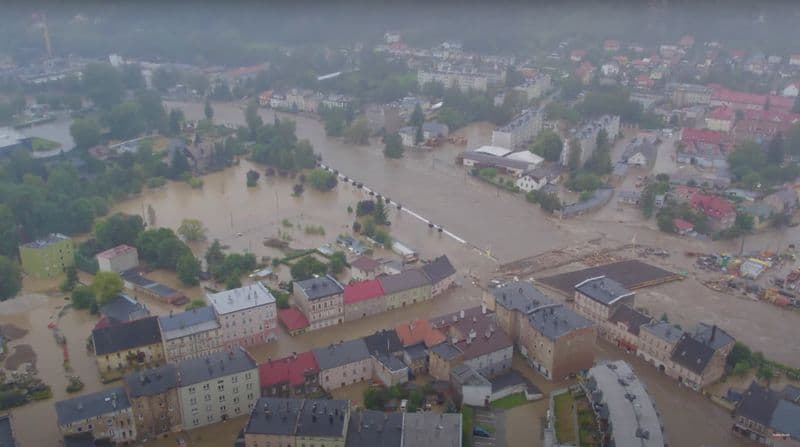
LONDON – When floods ravaged parts of Europe in September, the scale of the destruction surprised people. These intense rains should not have happened because they were predicted by sophisticated forecasting systems with artificial intelligence.

But being warned does not mean being warned. Although the rains were accurately predicted, their effects in flooded areas were not – a fact that highlights the difficulties of managing increasingly frequent extreme weather conditions.

AI has supercharged weather forecasting, using a range of statistical tools to analyze years of historical data and predict patterns, all at a lower cost than traditional numerical weather forecasts.

AI technology can create more specific forecasts ahead of events like urban flooding or in complex terrain like mountainous areas.

For example, Google-funded GraphCast, a machine learning-based method trained directly on reanalysis data, was found to outperform traditional models. Reanalysis data draws on past forecasts rerun with modern forecast models to provide the most complete picture of past weather and climate conditions.

But there are still gaps in knowledge, in how information is used and in investments to strengthen data collection models, experts say.

“In some cases and for some variables, AI models can beat physics-based models, but in other cases vice versa,” said Andrew Charlton-Perez, professor of meteorology at the University of Reading in the United Kingdom.

One problem is that the effectiveness of an AI model depends on the information it contains. If there are few input data or if extreme events occur more frequently at different times of the year or in different regions, weather disasters become more difficult to predict.

“A good use of AI-based weather forecasting would be to complement and improve our forecasting toolkit, perhaps allowing us to produce broader sets of forecasts allowing accurate assessment and interpretation of probability extreme events,” added Charlton-Perez.

COMMUNICATION IS KEY

Since January, the European Center for Medium-Range Weather Forecasts (ECMWF), an independent organization that provides forecasts four times a day to European countries, has been using artificial intelligence/integrated forecast system (AIFS).

This data-driven forecasting model quickly makes multiple forecasts and provides long-term predictions of weather events such as cyclones and heatwaves.

ECMWF readings before the September floods were accurate, experts say.

Thomas Wostal, press officer at weather observatory GeoSphere Austria, told Context/Thomson Reuters Foundation that their numerical models – including the ECMWF forecast – predicted 300 to 400 millimeters of rain locally, which happened.

But even with accurate forecasts, scientists say communication is key, especially at a time when climate change is leading to more extreme weather events.

“I think what’s happened with (the recent floods) … is that it’s so rare – an event occurring every 150 to 200 years – that even though the weather models pick it up, there has a reasonable degree of uncertainty,” Shruti said. Nath, postdoctoral research assistant in weather and climate forecasting at the University of Oxford.

“You have to produce the warning in a way that is communicative, in the degree of severity it could have on people, then people could see that the cost of inaction versus the cost of action is actually much higher. So they would actually put (in) more resources,” she said.

EUROPE BEHIND THE CURVE?

Europe faces urgent climate risks that outstrip adaptation policies and actions, warns a report from the European Environment Agency.

Extreme heat, drought, wildfires and floods will worsen in Europe even under optimistic global warming scenarios and affect living conditions across the continent, says the EEA.

After the floods, EU Crisis Management Commissioner Janez Lenarčič said the disaster was not an anomaly.

“These once-in-a-lifetime extreme weather events now occur almost every year. The global reality of climate change has crept into the daily lives of Europeans,” he said.

Some tech entrepreneurs say Europe is not ready.

Jonas Torland, co-founder of Norway-based 7Analytics, which develops flood and landslide forecasting models, said governments and companies in the United States have risk managers more accustomed to assessing risks. environmental risks, while in Europe, authorities lacked preparation.

“We often see substantial spending with minimal data for informed decision-making,” Torland, whose models are used in the cities of Oslo, Bergen and Kristiansand, told the Thomson Reuters Foundation.

“While AI is a crucial part of these models, unfortunately governments are not investing in or purchasing these advanced AI solutions,” he said, adding that he believes governments “s ‘stick to their old data providers and consultants’.

Data processing is also a challenge, as these complex AI models must be updated hourly as forecasts change.

This requires both a lot of computing power and a lot of time, especially at smaller scales.

A 1 by 1 meter grid, which 7Analytics uses for its predictions, is 100 times more detailed than a 10 by 10 meter grid, but requires more than 100 times more time to process.

High computing power also means that huge amounts of energy and water are required, making AI models part of the problem as they contribute to the planet’s heat emissions, origin of the climate emergency.

Some major technology companies, like Microsoft and Google, are exploring the use of nuclear power to power their massive data storage centers.

Other scientists point out that beyond perfecting their forecasting capabilities, authorities need to invest in physical solutions, such as developing areas where floodwater can be safely stored and early warning systems .

They must also minimize development in flood-prone areas, given the likelihood of more intense flooding linked to climate change, and meet their commitments to limit emissions.

“It’s not a question of data, technology or knowledge. It’s a question of implementation, of political will,” Friederike Otto, a senior lecturer at Imperial College London, said in a email response to questions.

“As long as the world burns fossil fuels, the root cause of climate change, extreme weather events will continue to intensify, killing people and destroying homes. To stop this trend, we must replace oil, gas and coal through renewable energies.”

(Reporting by Adam Smith @adamndsmith; editing by Clar Ni Chonghaile and Ayla Jean Yackley; The Thomson Reuters Foundation is the charitable arm of Thomson Reuters. Visit https://www.context.news)

Share. Facebook Twitter Pinterest LinkedIn Tumblr Email

Related Posts

Weaker Dollar and Diversification Enhance Appeal of Emerging Markets for Global Investors, According to Finnfund

March 18, 2026

Anna Money Achieves HMRC Approval for Making Tax Digital and Introduces Complimentary Auto Accountant Tool

March 18, 2026

DRC Fintech: 5 Essential Developments Transforming Digital Finance in 2026

March 18, 2026
Leave A Reply Cancel Reply

Latest news

California Establishes Itself as the Leading US FinTech Hub with Over One-Third of Q1 2025 Deals

March 19, 2026

Family Friendly Billing: 5 Proven Reasons Gyms Got It Wrong for Kids

March 19, 2026

A Comprehensive Guide to Enhancing Business Performance

March 19, 2026
News
  • AI in Finance (2,166)
  • Breaking News (227)
  • Corporate Acquisitions (86)
  • Industry Trends (280)
  • Jobs Market News (338)
  • Market Insights (309)
  • Market Rumors (308)
  • Regulatory Updates (216)
  • Startup News (1,375)
  • Technology Innovations (234)
  • uncategorized (10)
  • X Feed (1)
About US
About US

FintechBits is a blog delivering the latest news and insights in fintech, finance, and technology. We cover breaking news, market trends, innovations, and expert opinions to keep you informed about the future of finance

Facebook X (Twitter) Instagram Pinterest Reddit TikTok
News
  • AI in Finance (2,166)
  • Breaking News (227)
  • Corporate Acquisitions (86)
  • Industry Trends (280)
  • Jobs Market News (338)
  • Market Insights (309)
  • Market Rumors (308)
  • Regulatory Updates (216)
  • Startup News (1,375)
  • Technology Innovations (234)
  • uncategorized (10)
  • X Feed (1)
Happening Now

November 28, 2024

“ Intentionally collaborative ”: how the Rotman school of U of T leads Innovation Fintech

February 6, 2025

‘1957 Ventures’ to Drive FinTech Innovation in Saudi Arabia

September 10, 2024
  • About FintechBits
  • Advertise With us
  • Contact us
  • Disclaimer
  • Privacy Policy
  • Terms and services
  • BUY OUR EBOOK GUIDE
© 2026 Designed by Fintechbits

Type above and press Enter to search. Press Esc to cancel.