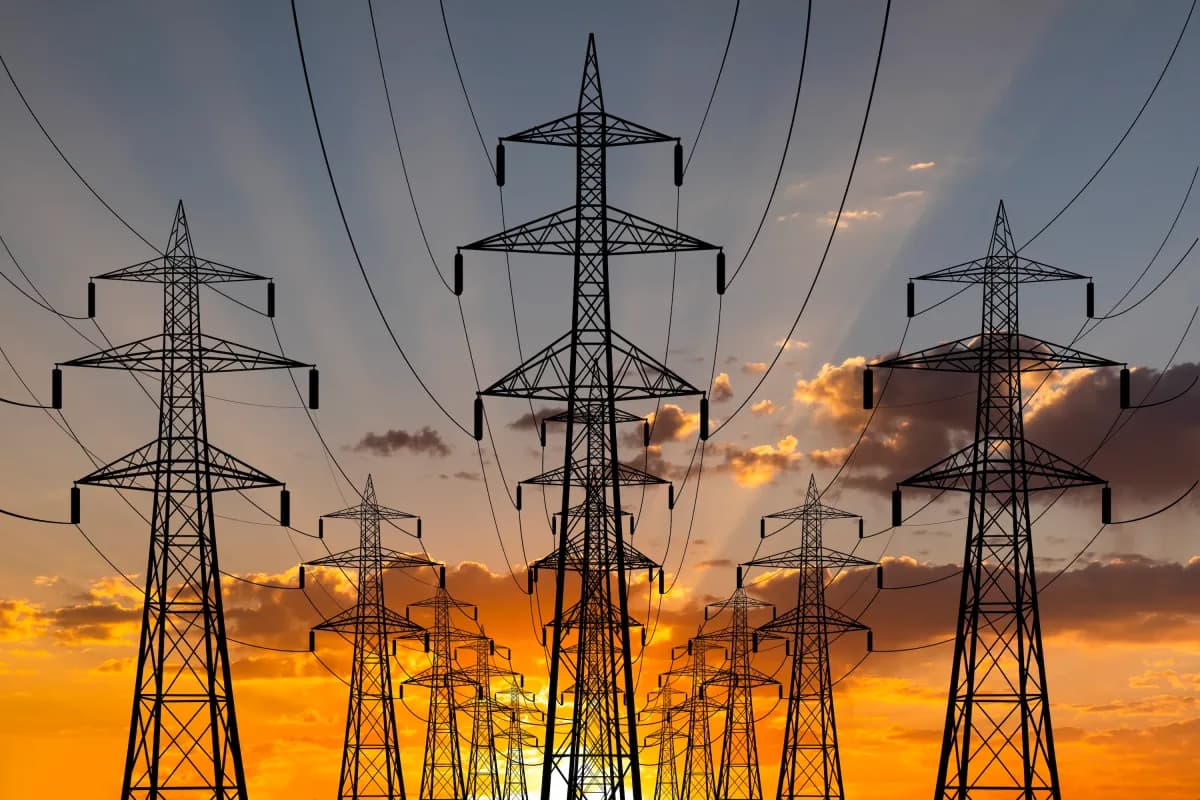
Venture capitalists have poured over half a trillion dollars into artificial intelligence startups during the past five years. Yet the smartest AI energy investment opportunity may not sit inside AI at all, but inside the power infrastructure that keeps it running. A growing body of evidence suggests that backing energy technology could deliver stronger, more durable returns than funding the next chatbot.
A recent report from Sightline Climate paints a stark picture of the bottleneck ahead. Roughly 30% to 50% of large data centres scheduled for 2026 face delays caused by power constraints, equipment shortages and growing community opposition. Out of 190 gigawatts tracked across 777 projects, only 5 gigawatts sit under active construction right now. Meanwhile, around 26% of 2025 projects slipped past their original deadlines. Furthermore, more than 10 new moratorium proposals targeting data centres have surfaced in U.S. states within the past month alone. These numbers reveal a physical bottleneck that no amount of GPU innovation can fix on its own. That is precisely why AI energy investment in power solutions is gaining momentum.
AI Energy Investment Shifts Toward Grid and Generation
So where is the capital flowing? For starters, major tech firms are throwing serious money at renewable energy buildouts and long-duration storage. Google recently committed roughly US$1 billion to Form Energy for a groundbreaking 300-megawatt iron-air battery system capable of discharging for 100 continuous hours. That deal supports a new data centre in Pine Island, Minnesota, backed by 1.4 gigawatts of wind power and 200 megawatts of solar. As a result, it marks Form Energy’s first deployment supporting a hyperscale data centre. It is also the largest single-site battery by energy capacity announced globally to date.
Meta and Google are also investing heavily in solar, wind and nuclear projects to secure long-term power agreements. In fact, Goldman Sachs Research projects that data centre power demand will surge 175% by 2030 compared with 2023 levels. That increase equals adding the electricity consumption of a top-10 power-consuming country to the global grid. For investors looking beyond hype cycles, this trajectory changes the calculus. It makes AI energy investment in power generation and storage far more attractive than pure software plays.
Why Power Constraints Threaten the AI Boom
The electricity shortages hitting the grid are unlike anything utilities have faced in recent memory. Rising energy costs are squeezing budgets nationwide, and tech companies are scrambling to find alternatives before their projects stall. Some firms now pursue independent on-site power solutions rather than waiting years for grid interconnection. Others accept higher energy rates just to keep timelines from slipping further. In both cases, the underlying dynamic stays the same. Electricity access has become the single biggest gating factor for new AI infrastructure. That reality alone is reshaping the AI energy investment landscape from the ground up.
Notably, Sightline Climate found that on-site and hybrid power approaches account for less than 10% of total projects by count. However, they represent nearly half of all announced capacity. This gap highlights a growing trend among the largest players. Leading hyperscalers like Amazon, Google and Oracle increasingly design facilities with their own generation assets baked in from day one. The U.S. government has also encouraged firms to establish independent power solutions. However, many companies had started pursuing those strategies well before any policy nudge arrived. For anyone tracking AI energy investment trends, the message is clear: power access now determines project viability more than chip supply or model performance.
For a broader look at how energy disruptions affect global markets, read our analysis on the recent energy shock.
Startups Solving the Power Puzzle
Beyond generation and storage, a wave of startups is tackling the plumbing of electricity distribution itself. Companies like Camus, GridBeyond and Texture are building software to optimise how power flows to and within data centres. At the same time, hardware startups are rethinking the transformer, a piece of equipment that has barely changed in over a century.
Three solid-state transformer companies recently raised sizable funding rounds that underscore the AI energy investment thesis in power hardware. Heron Power, founded by former Tesla executive Drew Baglino, closed US$140 million in Series B financing. Andreessen Horowitz and Breakthrough Energy Ventures co-led the round. Similarly, DG Matrix raised US$60 million in a Series A led by Engine Ventures with participation from ABB and Chevron. And Amperesand secured US$80 million to commercialise its medium-voltage solid-state transformer platform for hyperscale customers.
Traditional transformers rely on bulky iron and copper technology. As server racks reach power densities of 1 megawatt per rack, the supporting equipment balloons in size. It will soon occupy twice the physical footprint of the servers themselves. Consequently, solid-state transformers replace that legacy hardware with silicon-based power electronics that consolidate multiple devices into one compact unit. Although initial costs run higher, the space savings and efficiency gains make these systems competitive over time. Every square metre freed up inside a data centre can house more revenue-generating compute. That trade-off explains why AI energy investment in transformer tech is accelerating so rapidly.
The Safer Bet for Long-Term Returns
Despite the enthusiasm, AI energy investment flowing into battery and transformer technologies remains modest. It pales next to headline-grabbing AI funding rounds. Still, these bets carry a fundamentally different risk profile. Energy infrastructure serves demand across sectors stretching from transportation to heavy industry and residential electrification. As a result, investors gain a natural hedge against potential downturns in the AI market specifically.
Consider the broader context. Green fintech is moving well beyond compliance checkboxes into genuine value creation. Meanwhile, the AI-in-fintech landscape continues to mature rapidly. Both trends point toward the same conclusion: physical infrastructure now determines who wins the AI race, not software alone. Goldman Sachs estimates that roughly US$720 billion in grid spending may be needed through 2030 to support surging demand. That figure represents an enormous addressable market for companies building generation, storage and distribution solutions.
In other words, AI energy investment in the foundational power layer offers durability that pure-play AI software cannot match. The companies building batteries, solid-state transformers and grid intelligence may not grab the same headlines as the latest large language model. However, they could deliver steadier, more resilient returns over the next decade. For those looking to capitalise on the AI revolution, the smartest AI energy investment may not chase the models at all. It may chase the megawatts instead.