

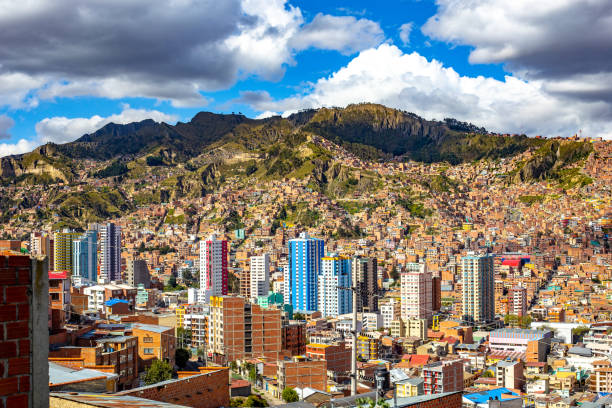
Historical Foundations and Economic Realities of Bolivia
Bolivia’s identity is deeply intertwined with its history and abundant resources. Once a pivotal part of the Spanish Empire due to its vast silver reserves, particularly in Potosí, Bolivia has traditionally relied on its natural wealth—including minerals and natural gas—as the cornerstone of its economy. In the past few decades, a combination of a robust state-led economic model and political instability has influenced the nation’s developmental trajectory.
As we look toward 2026, a new narrative is gradually unfolding. With economic pressures, restrictions on currency access, and evolving policy priorities, digital finance is emerging not as a luxury, but as a necessary response to longstanding structural issues.
With a gross domestic product (GDP) estimated at approximately $56 billion and a GDP per capita exceeding $3,700, Bolivia is categorized as a lower-middle-income economy. The country continues to depend heavily on its natural resources, which include natural gas, gold, and zinc.
Digital Transformation Necessitated by Economic Conditions
The digital transformation in Bolivia does not stem from a cohesive national fintech strategy but is rather a result of pressing economic circumstances. Limited access to foreign currency, inflationary pressures, and stringent liquidity constraints have spurred the adoption of alternative financial solutions.
The government is actively seeking to modernize the economy, negotiating over $9 billion in multilateral financing aimed at supporting infrastructure, enhancing financial inclusion, and fostering economic recovery. These modernization efforts increasingly depend on the integration of digital finance within the broader financial framework.
Regional trends, particularly the ascent of fast payment systems across Latin America, are also shaping Bolivia’s approach to enhancing its digital financial infrastructure.
Financial Services Sector Undergoes Digital Evolution
Despite the digital wave, Bolivia’s financial services sector remains predominantly traditional, characterized by a reliance on banks and limited penetration of fintech solutions compared to its regional neighbors. The Central Bank of Bolivia oversees this framework, playing a crucial role in monetary policy, payment infrastructure, and financial regulation.
Institutions like Banco Nacional de Bolivia have initiated mobile banking platforms, enabling customers to conduct transactions, manage accounts, and access services digitally. However, limitations persist, with payment processing times often ranging from 24 to 72 hours—a reflection of both infrastructural constraints and regulatory measures.
Regulation Marks a New Era for Fintech
A significant turning point for Bolivia’s fintech landscape occurred in 2025 with the introduction of the first formal regulatory framework recognizing fintech companies. This comprehensive framework includes provisions for blockchain-based financial services, paving the way for a more structured and transparent digital finance environment. Moreover, the government is beginning to lift prior restrictions on digital assets, allowing regulated institutions to engage in crypto-related activities for the first time in years.
Financial Inclusion as a Catalyst for Innovation
Challenges related to financial inclusion are still prevalent in Bolivia. While access to banking services has improved, many segments of the population—especially in rural areas—remain underserved. Economic uncertainties have further complicated access, reshaping lending practices and financial behavior across the board.
However, these challenges are also driving innovation. The rise of digital tools, such as mobile banking and alternative payment methods, is helping to close gaps in financial access. Notably, cryptocurrency adoption has surged, with transactions reaching approximately $294 million in the first half of last year, compared to $46.5 million the year prior, marking an increase of over 500 percent.
The Growing Fintech Ecosystem and Future Prospects
Bolivia’s fintech ecosystem is still maturing, with an estimated 30 to 50 fintech firms currently operating in the country as of 2026. These companies primarily focus on areas such as digital payments, remittances, alternative finance, and crypto services. Notable domestic players include Soli, La Primera, and Printing Calculator, while international firms like the Peruvian fintech Yape are enhancing the digital wallet sector in Bolivia.
While the fintech landscape in Bolivia is relatively small compared to larger Latin American markets such as Brazil or Argentina, evolving regulations and increasing market demand present opportunities for growth. The future of Bolivia’s fintech industry will hinge on its ability to navigate economic instability while promoting innovation. The ongoing challenges of currency volatility, regulatory uncertainty, and infrastructural limitations must be addressed as digital finance continues its ascent, driven by necessity and urgency.
As the nation moves forward, strengthening payment infrastructure, expanding digital access, and ensuring regulatory clarity will be essential for the next phase of development. Bolivia’s fintech ecosystem stands at a pivotal juncture, beginning to align the foundational elements necessary for significant advancement.