

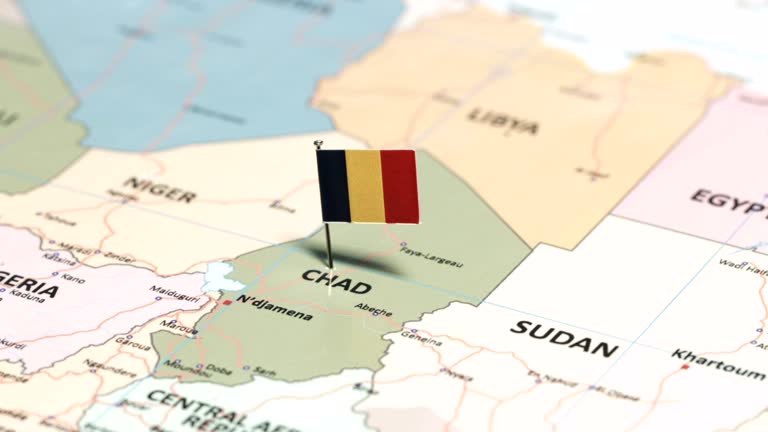
The Chad fintech ecosystem is starting to take shape at a time when digital finance across Africa is accelerating fast. While the country sits far behind established hubs like Nigeria and Kenya, mobile money expansion and a newly licensed local payment company suggest the foundations for change are now in place.
Across Africa, fintech innovation follows the spread of mobile networks and government-led digital reforms. Chad fits that pattern. Its financial landscape has been defined by extremely low banking penetration and near-total reliance on cash, but recent developments in telecommunications infrastructure and regional financial integration [NEW] are opening new doors.
Financial Inclusion Barriers Still Define the Chad Fintech Ecosystem
The Chad fintech ecosystem faces a starting point that most fintech markets would consider extreme. As recently as 2017, only 9 percent of adults had access to a bank account. Rural areas remain almost entirely cut off from formal banking, with branches concentrated in N’Djamena and a handful of regional centres.
These structural constraints have historically blocked the development of digital financial services. When most of the population operates outside the formal banking system, there is no obvious customer base for digital-first products. However, policymakers and development organisations are now treating digital infrastructure as a core development priority rather than a secondary concern.
The World Bank’s Digital Economy Diagnostic for Chad [NEW] makes the case clearly: improving digital connectivity and expanding digital financial services are essential steps for integrating more citizens into the formal economy. That diagnostic also sits within the broader Digital Economy for Africa initiative [NEW], which targets digital enablement for every African individual, business, and government by 2030.
Chad’s national economic plan aligns with this direction. The government aims to attract significant investment into infrastructure, energy, and digital services to diversify away from oil dependence and accelerate growth.
Mobile Money Becomes the Gateway for the Chad Fintech Ecosystem
As in most African markets, mobile money is emerging as the primary entry point for fintech services in Chad. The Chad fintech ecosystem depends heavily on mobile penetration, which reached over 14 million subscriptions by 2024 and is approaching an 80 percent penetration rate.
Mobile money platforms allow users to transfer funds, pay bills, and receive remittances through a mobile device instead of a bank account. These services have proven critical in markets where physical banking infrastructure remains scarce. For Chad, mobile money bridges a gap that traditional banks have never filled.
In October 2025, Chad licensed Konoom, its first fully Chadian-owned mobile money company [NEW]. Co-founded by Abakar Mahamat Adoum Fortey and Brahim Moussa Hassane, Konoom secured a payment institution licence from the Finance Ministry and the Central African Banking Commission (COBAC). Its services include mobile transfers, tax and public service payments, airtime purchases, and merchant transactions.
Previously, only Airtel Commerce Mobile Tchad held authorisation to offer similar services in Chad, operating through a partnership with a foreign telecom operator. Konoom’s entry diversifies the market [NEW] and introduces genuine local competition to the Chad fintech ecosystem for the first time.
Regional Integration Strengthens the Chad Fintech Ecosystem
The Chad fintech ecosystem does not operate in isolation. As a member of the Central African Economic and Monetary Community (CEMAC), Chad shares financial regulations and payment infrastructure with Cameroon, Congo, Gabon, Equatorial Guinea, and the Central African Republic.
That regional connection matters because CEMAC’s digital payments market is projected to grow 25% annually through 2028 [NEW], driven by mobile money expansion, virtual card launches, and tighter ISO 20022 messaging standards. Enhanced regional payment connectivity could enable cross-border digital payments between CEMAC countries, which would give the Chad fintech ecosystem access to a much larger addressable market.
The regional picture also includes encouraging policy signals. Chad’s draft 2026 finance law proposes eliminating taxes on money transfers [NEW], reversing a 0.2% levy introduced in 2022. That move contrasts with neighbouring Cameroon, which has added additional transaction charges. If implemented, removing transfer taxes would directly reduce costs for mobile money users and strengthen adoption across the Chad fintech ecosystem.
Meanwhile, innovation ecosystems like the Chad Innovation Hub in N’Djamena are beginning to support local entrepreneurs. These technology hubs provide mentorship, training, and incubation programmes aimed at nurturing a new generation of tech-driven founders across sectors including digital financial services and payments.
What Comes Next for the Chad Fintech Ecosystem
As of 2026, the Chad fintech ecosystem remains in its earliest stages. Digital infrastructure challenges persist, startup activity is limited, and investment in financial technology stays modest. However, several indicators point toward gradual progress.
Mobile connectivity keeps expanding. Digital payment services are gaining broader acceptance. Konoom’s licensing proves that local entrepreneurs can navigate CEMAC’s regulatory framework and compete. BCG’s recent analysis of Africa’s broader fintech trajectory [NEW] reinforces the point: the continent’s next wave of digital finance requires moving beyond basic payments into interoperable infrastructure and expanded credit access. Chad is not there yet, but the building blocks are forming.
For a country historically reliant on cash and conventional banking, any progress in digital finance represents a meaningful step toward greater financial inclusion and economic participation. The Chad fintech ecosystem may not command international headlines today. Whether it does five years from now depends on how well local entrepreneurs, regional institutions, and government reformers execute on the momentum already underway.