

Travis Kalanick’s Return and New Ventures
In an unexpected turn of events, Travis Kalanick, Uber’s co-founder and former CEO who stepped down in 2017 amid various controversies, has announced his latest venture: a robotics company named Atoms. Kalanick is not only making headlines with this announcement but is also set to acquire Pronto, an autonomous vehicle startup focused on industrial and mining applications, founded by his former colleague Anthony Levandowski. Kalanick has stated that he is already the largest investor in Pronto.
A Look Back at 2016 and the AV Buzz
This news certainly evokes memories of 2016, a year that brimmed with excitement for autonomous vehicles (AVs). That year, Uber’s acquisition of Levandowski’s startup Otto led to significant legal entanglements, including a high-profile lawsuit from Waymo over alleged trade secret theft. The current developments signal a potential resurgence of those ambitious, albeit tumultuous, times in the AV landscape.
Rivian Unveils R2 Strategy at SXSW
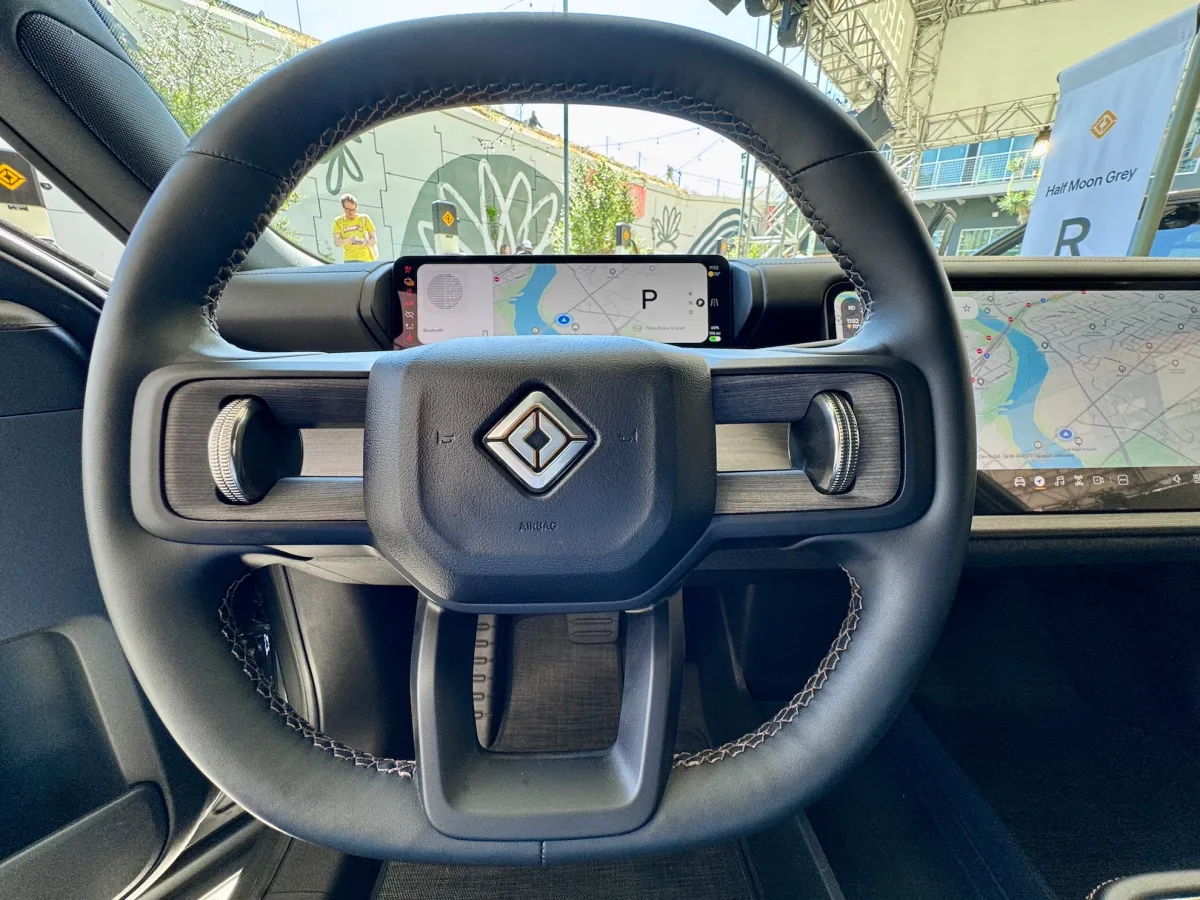
Continuing our focus on major players in the electric vehicle market, Rivian is making waves at this year’s SXSW festival. As the headline sponsor, Rivian is leveraging the event to unveil pricing details and specifications for its highly anticipated R2 SUV, expected to be one of the fastest vehicle launches in history. The performance launch edition is priced at $57,990, while a more affordable $45,000 version is slated for release in late 2027. Coverage of this announcement has touched upon Rivian’s targeted marketing strategy aimed at SXSW attendees, who largely reflect its core consumer demographic.
Technological Innovations in the R2
Rivian is not just focusing on marketing but also on the technological advancements in the R2. The new model features an advanced operating system that significantly enhances computing capabilities compared to the flagship R1 series. Instead of relying primarily on cloud computing, the R2 employs a single System on Chip (SoC) that processes up to 200 tera operations per second, a notable benchmark in the realm of edge computing. This innovation will facilitate faster response times and improved performance, especially for running large language models locally.
Lucid Motors Explores Robotaxi Concepts
In a different domain, Lucid Motors recently showcased a robotaxi concept during its investor day, presenting plans for a dedicated Lucid Robotaxi following the launch of its midsize EVs. Despite the ambitious statements made by Interim CEO Marc Winterhoff, the company clarified that no active development is currently underway, raising questions about the project’s timelines and viability.
Recent Funding and Growth Trends
Shifting focus back to Rivian, the company has made headlines for spinning off Mind Robotics, an industrial robotics lab that recently secured $500 million in Series A funding, co-led by notable venture firms like Accel and Andreessen Horowitz. This initiative aligns with Rivian’s broader strategy of innovation in robotics, and CEO RJ Scaringe has emphasized that companies often overlook the importance of hand function in robotic systems. His insights propose a fresh perspective on industrial robotics, focusing on practical applications rather than mere mimicry of complex human movements.
Market Moves and Transactions
In terms of market dynamics, inDrive has made headlines by acquiring the Pakistani quick-commerce startup Krave Mart, following regulatory approval from the Competition Commission of Pakistan. This acquisition marks a significant expansion for inDrive in the thriving e-commerce and delivery sector. Meanwhile, Mirai Robotics has raised $4.2 million to develop autonomous maritime systems, illustrating the growing interest and investment in innovative transportation solutions worldwide.
Noteworthy Developments and Industry Highlights
A few other compelling updates from the industry include Archer Aviation’s counterclaims in a lawsuit against Joby Aviation, further intensifying competition in the electric air sector. Group14 has commenced production of silicon battery materials aimed at enhancing EV performance, while Tesla has recently attained licensed utility status in the United Kingdom, underscoring its diverse aspirations beyond traditional automotive manufacturing. As innovations and market movements continue to reshape the landscape, the focus on sustainability and technology will remain pivotal in the future of transportation.