

By Jesse Fowler, Founder of J&J Renovations and J&J Plumbing Services
If you’re a plumber, sparkie, or builder, you probably see insurance as a grudge purchase. You pay thousands a year, deal with paperwork you don’t understand, and hope you never need to use it. When you do need it, the claims process feels like it was designed to make you give up.
That’s starting to change. A wave of insurtech companies is rebuilding how trade insurance works from the ground up. However, most of these innovations haven’t reached the average tradie yet. Here’s what’s happening, why it matters, and where the biggest gaps remain.
AI Is Speeding Up Claims (Finally)
The traditional insurance claim involving a contractor takes 70 to 80 days from start to finish. That’s weeks of waiting for adjusters, back-and-forth on estimates, and delayed payments that mess with your cash flow. On top of that, roughly 42% of all home insurance claims get denied outright.
New technology is compressing that timeline significantly. Companies like Tractable use computer vision to assess property damage from smartphone photos. Instead of waiting for someone to come out in person, the AI analyses the images, breaks down the damage by component, and generates repair estimates complete with materials, labour, and regional pricing. Settlement times drop from months to as little as one day in some cases.
Meanwhile, Australian-founded Handdii tackles the specific pain point of smaller property claims under $25,000. Since these make up about 80% of all property claims, the impact is massive. They’ve cut the process to under 30 days while pushing customer satisfaction to 4.9 stars.
Drones are also making a difference. Allstate now issues repair estimates in 4.5 days using drones compared to 11 days with traditional inspections. As a result, one drone-assisted adjuster can process three houses per hour instead of three per day.
Flexible Coverage Is Replacing the Old Annual Premium Model
For decades, trade insurance meant paying a big lump sum once a year and hoping you got the right coverage. That model doesn’t work well for tradies with seasonal workflows or fluctuating revenue.
Several companies now offer on-demand and pay-as-you-go options instead. Thimble, for example, lets you buy general liability by the hour, day, or month. Policies start at $5 for short-term coverage. What’s telling is that 73% of Thimble’s customers were first-time insurance buyers. In other words, flexible pricing brought previously uninsured tradies into the fold.
Next Insurance (now owned by Munich Re’s subsidiary ERGO after a $2.6 billion acquisition) serves over 600,000 business owners. They offer instant quotes, downloadable certificates of insurance around the clock, and claims decisions within 48 hours. In Australia, BizCover covers 270,000+ SMEs across 800+ trade occupations, while newcomer Upcover raised $19 million in 2025 and already serves 60,000 businesses.
Pay-as-you-go workers’ comp is another game changer for trades. Traditional workers’ comp requires paying 25 to 100% of the premium upfront based on estimated payroll. Then you get hit with audit surprises at year end when your payroll doesn’t match estimates. Companies like Pie Insurance calculate premiums each pay cycle based on real payroll data instead. No lump sum deposit. No nasty surprises.
The Biggest Opportunity Nobody Has Touched
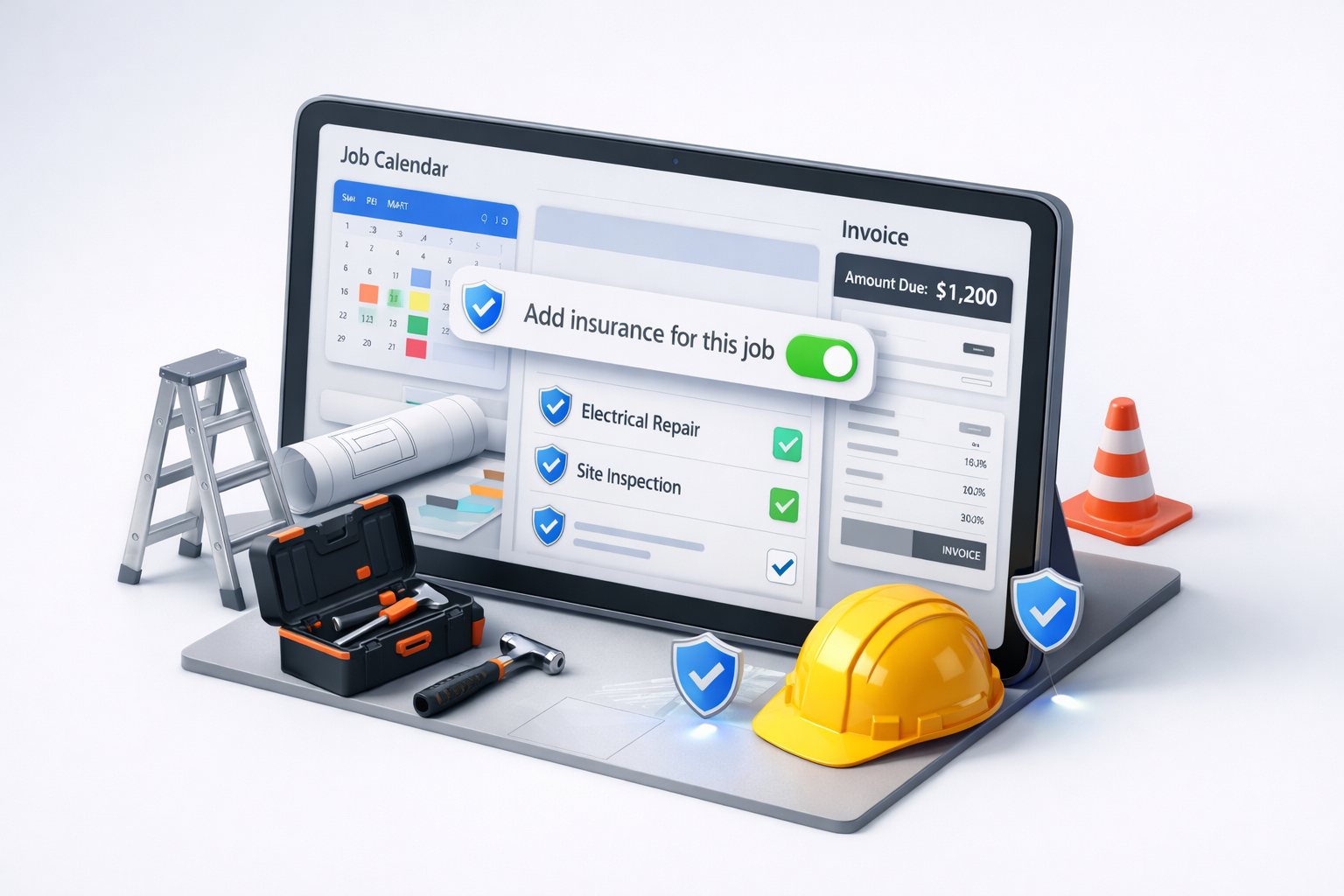
Here’s the thing that stands out most across all the research. None of the major trade job management platforms embed insurance products. Not ServiceTitan. Not Jobber. Not Fergus, Tradify, ServiceM8, or Simpro.
These platforms handle quoting, invoicing, scheduling, and payments for millions of tradespeople worldwide. They sit at the exact point where insurance could be offered in context. When you quote a new job, schedule a high-risk task, or onboard a subcontractor, that’s the natural moment to check or purchase coverage. Yet that touchpoint doesn’t exist.
The infrastructure is ready. Companies like Cover Genius, Boost Insurance, and Coterie all offer plug-and-play APIs that could integrate insurance into any software platform. Embedded insurance in other industries already converts at 3 to 5 times higher rates than standalone channels.
Tradies Are Still Massively Underinsured
Despite all this innovation, the adoption gap remains enormous. In Australia, 26% of small-to-medium businesses carry no general insurance at all. For sole traders, that jumps to 40%. Broker estimates suggest 70 to 80% of those who do have coverage are underinsured.
Rising material costs make the problem worse every year. Timber is up 50%. Sheet materials have doubled. Yet most tradies haven’t updated their coverage to reflect current rebuild costs. Only 27% of Australian SMEs have business interruption insurance, even though 81% acknowledge a disruption would severely impact their business.
The cost itself is a barrier too. US general liability for contractors averages $82 per month but ranges wildly depending on trade. Roofers pay $267 per month while painters pay $42. Workers’ comp rates vary over 12 times across US states for identical work.
Where This Is All Heading
Three things will shape what comes next. First, consolidation is accelerating. Big reinsurers like Munich Re and Allianz are buying the successful insurtechs and scaling their models globally. Second, embedded insurance in trade software is inevitable. The gap between ready infrastructure and zero adoption won’t last. Third, the underinsurance crisis will eventually force a response, either from regulators or from the market itself.
The companies that crack distribution to the tradesperson who works from a van, prefers a phone call, and doesn’t have time for apps will define the next era of trade insurance. The technology is there. The delivery mechanism isn’t. Not yet.